
Last updated November 23, 2026
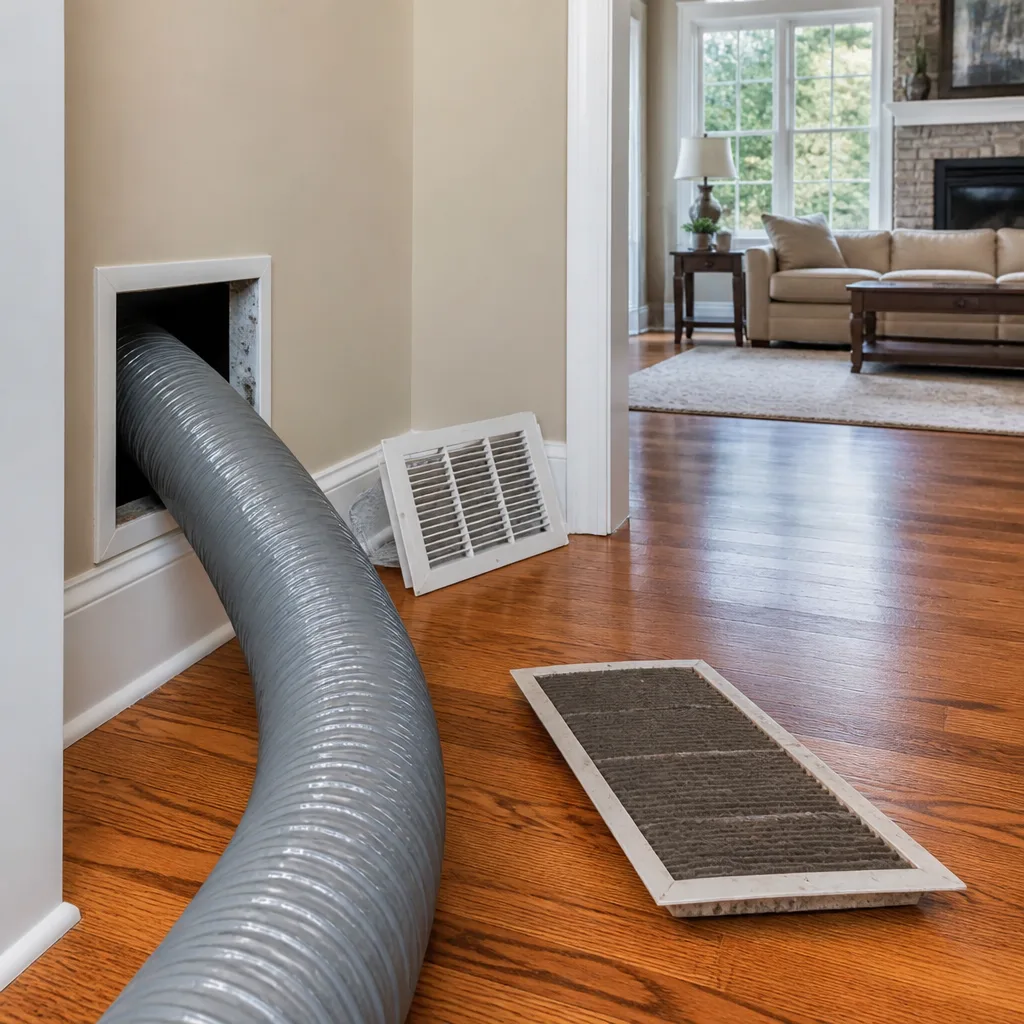 Whole-home duct cleaning
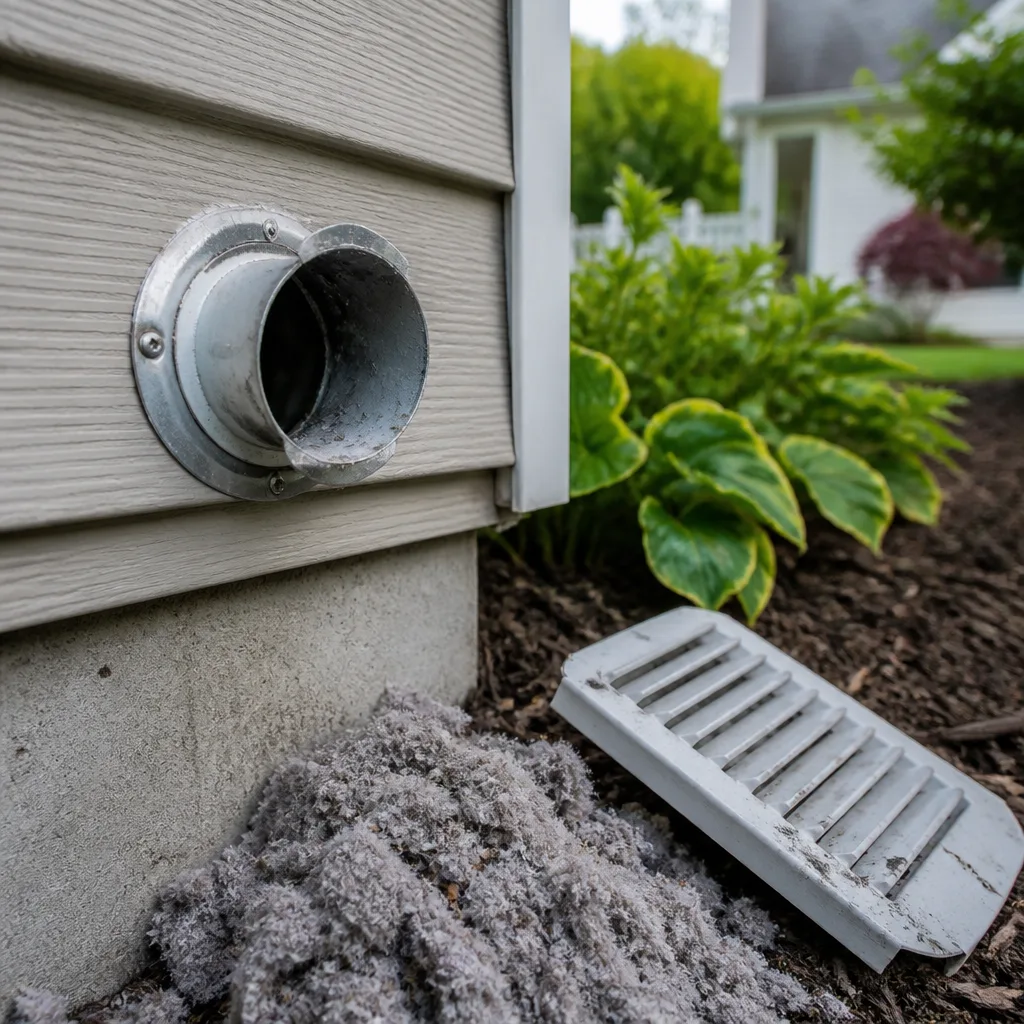 Dryer vent cleaning
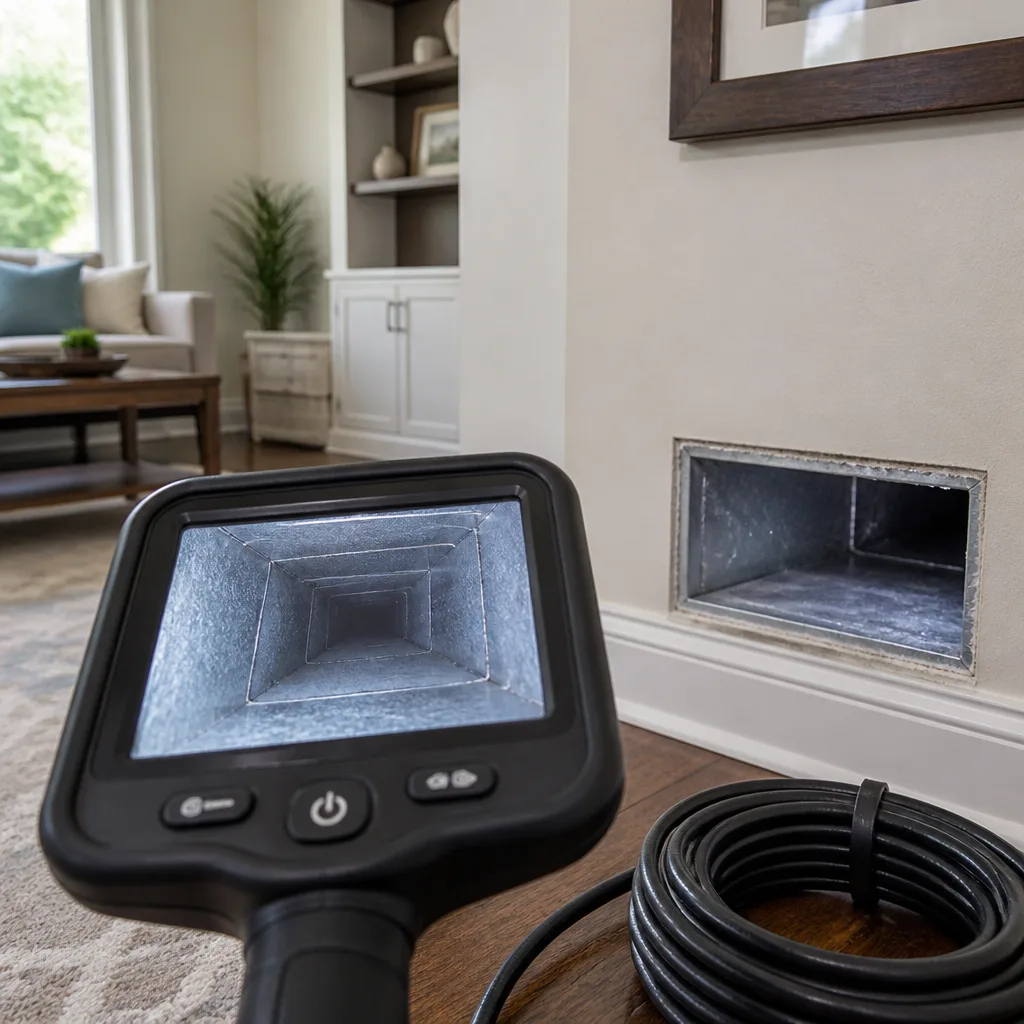 Camera inspection
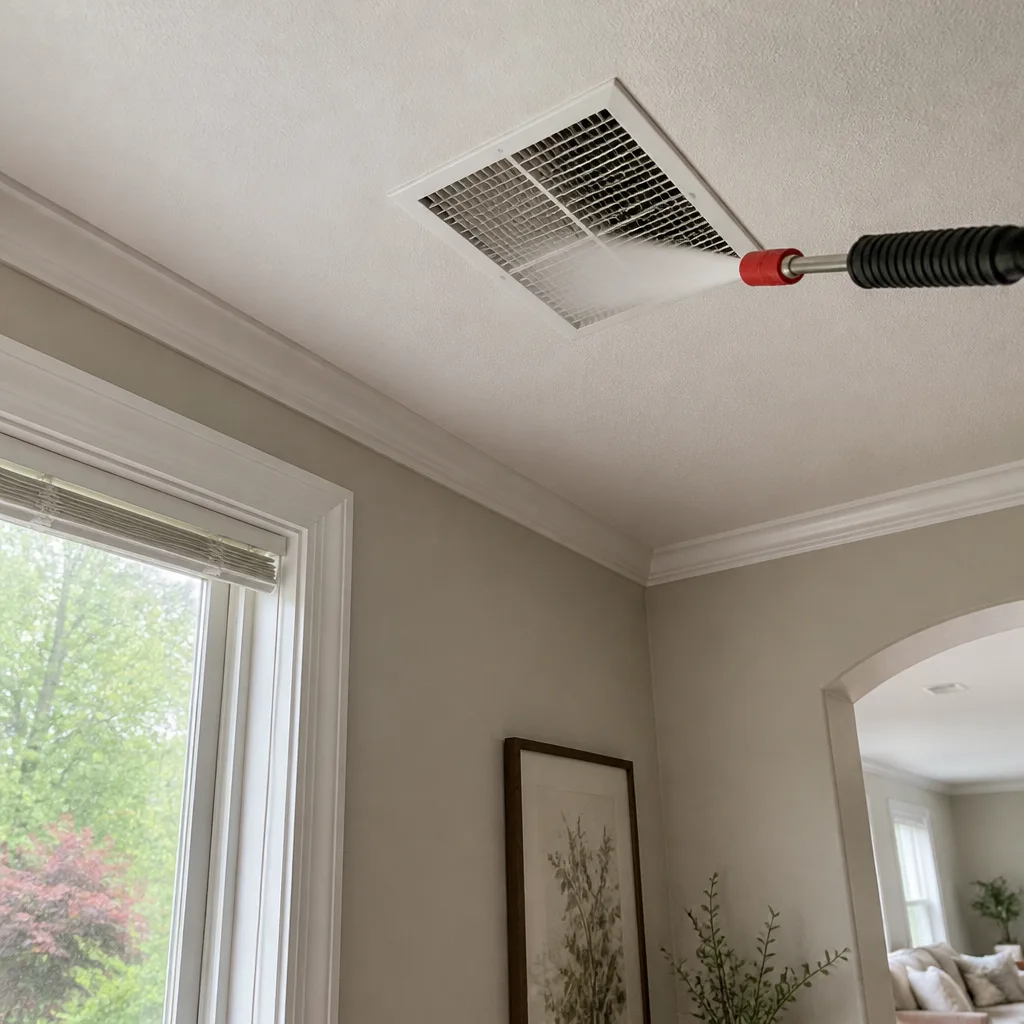 Sanitizing & deodorizing
Whole-system duct and dryer vent check with before-and-after photos - you see exactly what came out of your vents
That "$99 whole-house special" is a bait ad - the real number appears once they are in your hallway, or the "clean" is a shop-vac at the register. We photograph the inside of your ducts before and after instead.
DIY vs Professional Air Duct Cleaning: The Uptown Homeowner’s Decision Guide
Here’s a number worth sitting with: a homeowner with a shop vac and a dryer vent brush can clean roughly 18 inches into a duct run. That’s it. A technician running a truck-mounted negative-pressure system cleans the entire run – every branch, every elbow, the main trunk – in one continuous operation. That gap isn’t about effort or good intentions. It’s about physics and access. This guide maps exactly where the DIY ceiling sits, which tasks you can genuinely handle yourself in an Uptown home, and which ones you shouldn’t try. You’ll get an honest equipment comparison, a decision matrix built on four variables, and a clear list of the situations where a shop vac does more harm than good.
Quick Answer
For light surface dust and register grilles, DIY cleaning works fine. For anything past about 18 inches into the duct run – main trunks, branch lines, plenum connections, and any system showing mold, pest debris, or heavy buildup – professional cleaning with contractor-grade negative-pressure equipment is the only method that actually removes the contamination rather than stirring it up. The honest dividing line isn’t whether you can reach into a duct. It’s whether you can reach the whole duct, and most Uptown systems have runs no shop vac will ever touch.
Styles & brands we work with
- Whole-home duct cleaning
- Dryer vent cleaning
- Camera inspection
- Sanitizing & deodorizing
Table of Contents
- The Equipment Gap: Shop Vac CFM vs Truck-Mounted Suction
- What DIY Duct Cleaning Actually Handles Well
- When DIY Duct Cleaning Makes Things Worse
- Why Uptown Condos and Townhomes Change the Calculation
- The Four-Variable Decision Matrix
- What Professional Cleaning Costs vs a DIY Attempt
- Common Mistakes to Avoid
- When to Call a Professional
The Equipment Gap: Shop Vac CFM vs Truck-Mounted Suction
The reason a shop vac stops at 18 inches has nothing to do with the operator. It’s airflow volume and pressure differential. A typical consumer shop vac moves somewhere in the range of 100 to 200 cubic feet per minute of air, and most of that pulling force collapses the moment you attach a hose and nozzle. A truck-mounted vacuum built for duct cleaning generates a sustained negative pressure across the entire duct system, so the whole run is under suction simultaneously. Dust doesn’t get pushed around inside the duct. It gets pulled out.
That difference matters most at depth. The contaminants that cause the symptoms Uptown homeowners actually notice – allergy flare-ups, musty odors drifting from registers, uneven airflow between rooms – are sitting in the parts of the system you can’t see or reach. The main trunk line runs through walls and ceilings. Branch lines feed individual rooms. If only the first foot and a half gets cleaned, the source stays put.
The equipment we work with tells the story. Rotobrush systems use a whip-and-brush head driven by compressed air to agitate the full length of a duct run while a vacuum pulls debris back through the hose. Nikro equipment handles the collection side. Abatement Technologies filtration gear matters when contamination needs containment rather than simple removal. These aren’t upgrades of a shop vac. They’re a different category of tool.
Here’s the practical comparison:
- Consumer shop vac: limited CFM, no negative pressure across the system, working depth of roughly 18 inches per reach, debris gets redistributed.
- Rotobrush or Nikro system: continuous agitation through full run lengths, connected to a high-volume vacuum, debris captured at the source and removed from the home.
- Negative-pressure containment: keeps disturbed particulate from drifting into living space during the job. This is what separates cleaning from stirring.
None of that means a shop vac is useless. It means it has a job, and that job ends where the duct run begins. If you want a fuller picture of what a complete system cleaning involves, our air duct cleaning page walks through the process step by step.
What DIY Duct Cleaning Actually Handles Well
We mean this sincerely: several duct-adjacent tasks are worth doing yourself, and they help. Skipping them while calling a contractor is a waste of money. Here’s what makes the DIY list, roughly in order of payoff.
- Register and grille vacuuming. Pop the grille off, vacuum both faces with a brush attachment, and wipe the frame. A few minutes per register, and it’s the most visible dust you’ll remove.
- Filter replacement. Check the filter monthly, replace it on the schedule the manufacturer specifies, and match the MERV rating to your system’s design. A clogged filter starves the system and pushes dust downstream. This single habit prevents more problems than any cleaning tool.
- Accessible duct and plenum vacuuming. If you can see the inside of a return drop or the plenum connection at the air handler, gentle vacuuming of loose surface dust is fine.
- Visual inspection and documentation. Take photos of every register opening, note which rooms have weaker airflow, and check the return for visible dust streaks or discoloration. This documentation is genuinely useful – it’s the same starting point a technician uses.
- Exterior dryer vent flap cleaning. Remove lint from the outside flap and clear the immediate opening. That’s the outer edge of dryer vent cleaning, and it’s worth doing routinely.
Notice what’s not on this list: anything that requires reaching past the first elbow or branch. That’s where the DIY method runs out. A homeowner with a shop vac and a dryer vent brush can maintain the visible edges of the system. The system itself needs equipment that can reach the whole pathway.
When DIY Duct Cleaning Makes Things Worse
This is the section we most want Uptown homeowners to read carefully. DIY duct cleaning isn’t dangerous – but there are specific conditions where it stops being harmless and starts being counterproductive.
Mold growth inside the ductwork. If you’ve seen visible mold on a register or the inside of a duct, the problem isn’t the mold you can see. It’s the colony behind it and the spores it releases. Agitating mold with a shop vac without containment spreads spores through the system and into living space. A professional response involves containment, HEPA-level filtration, and typically a sanitizing step with a product like Guardsman after the removal. We flag this as a case for a trained professional, and we’re not being modest – disturbance without containment is the wrong move.
Duct insulation that may contain asbestos. Homes built before the 1980s sometimes have duct wrap, tape, or insulation that contains asbestos. It’s not visible to the eye and it can’t be identified by guessing. If your Uptown home is older, have the material assessed before anything disturbs it. This is a job for a licensed abatement professional, not a shop vac, and not a duct cleaning crew either. Get the material identified first.
Active pest contamination. Rodent droppings, nesting material, or dead pests in a duct system carry real health risk. Disturbing that material with a shop vac aerosolizes it. Contaminated systems need remediation-level handling, which is exactly the category Abatement Technologies equipment exists for.
A wet or water-damaged system. If the ducts are damp – from a leak, condensation, or a previous water event – cleaning before drying makes the problem worse. Mold colonization happens on wet surfaces. Fix the moisture source first.
If any of those conditions apply to your home, the DIY question is answered. Call for a professional assessment. The rest of this guide addresses the ordinary case.
Why Uptown Condos and Townhomes Change the Calculation
Uptown’s housing stock is not the suburban ranch-house template. It’s a mix of high-rise condos, mid-rise buildings, multi-story townhomes, and older converted properties. Each of those creates access constraints that change the DIY math.
In a high-rise condo, the air handler is often in a closet, a soffit, or a utility chase. Duct runs travel through shared building structure, and access panels may be minimal or nonexistent from your unit. Flexible duct may thread through tight framing with multiple bends. The 18-inch reach problem multiplies when the first accessible opening is already several feet from the system’s main run. There’s simply no place to attach a shop vac that reaches what needs cleaning.
In a multi-story townhome, you’re usually dealing with more vertical duct runs than horizontal ones. Supply trunks may rise through interior walls from a ground-level or mid-level unit. Each floor has branch lines, and the returns often cross multiple levels. That’s more total duct length and more elbows, and every elbow is a place where a shop vac hose can’t turn.
Add in the local climate. Uptown’s mild winters and warm, humid summers mean the system runs cooling for much of the year. Condensation control matters here. Ducts that stay cool and slightly damp in summer are more vulnerable to microbial growth than a system in a dry climate, which raises the stakes on full-length cleaning and on repair of any leaky duct joints. A sealed, dry system resists that growth. An unsealed one feeds it. That’s the reasoning behind our emphasis on closing the system through duct repair and sealing rather than cleaning around gaps.
Whatever your layout, the right first step is a duct inspection that maps the actual run geometry. From there, the decision is straightforward.
The Four-Variable Decision Matrix
Whether professional duct cleaning is optional or necessary comes down to four variables. Score your home against each one and the answer usually becomes obvious.
- Home age. Older Uptown properties have had more time to accumulate construction debris, settle, and gather decades of dust in unreachable runs. Homes from earlier eras may also have duct materials or insulation that require assessment before any cleaning. Under roughly 10 years old with no visible issues, DIY maintenance is reasonable. Older, or unknown, and professional cleaning is the safer call.
- Duct material. Sheet metal ductwork is durable and cleanable. Flexible duct has a corrugated interior that traps dust on every ridge, and DIY agitation tends to push debris into the folds rather than remove it. Duct board – common in older construction – can deteriorate and shed fibers. Flexible or duct board systems need professional handling.
- Contamination type. Household dust is a maintenance problem. Mold, pest debris, water damage, or suspected asbestos is a remediation problem. Different category, different equipment, different level of care.
- System complexity. Single-story homes with accessible trunks are the most DIY-friendly. Multi-story townhomes, high-rise condos, and any system with multiple zones or long vertical runs push toward professional service. The more ducts, the more branches, and the more elbows, the more the 18-inch limit matters.
Read the matrix like this: if you answer “older, flexible or duct board, contamination present, complex layout” on any two or more, DIY is no longer the right answer. If you’re under 10 years old, sheet metal, ordinary dust, and accessible layout, you can handle the maintenance tasks listed earlier and revisit the question in a few years.
We’ve mapped this out across many Uptown households, and the pattern is consistent: the systems that need professional cleaning are the same ones that make DIY practically impossible.
What Professional Cleaning Costs vs a DIY Attempt
Here’s where we’d rather be direct than clever. DIY duct cleaning is cheaper on paper, but it doesn’t produce a comparable result, so the comparison isn’t quite apples to apples. A shop vac and a brush cost less than a professional cleaning. But you’re buying a different service: the visible surfaces, not the full system.
Professional cleaning is a whole-system job. It includes the main trunk, every branch, the plenum, the air handler connection, and the registers. Depending on home size, system layout, and contamination level, that’s a scheduled, equipment-heavy operation. We don’t quote per-vent prices, and we’re skeptical of anyone who does – that’s the pricing model that turns a small coupon into a larger invoice once the technician is on site. We work from one flat price per system, agreed in writing before the work starts, with before-and-after photos of your own ducts so you can verify what was done.
What’s included in a full-system professional visit:
- Inspection of the duct layout, connections, and air handler access.
- Negative-pressure setup with containment to keep particulate out of living space.
- Rotobrush or Nikro mechanical agitation through every run.
- Collection and removal of debris from the home.
- Before-and-after photo documentation of your ducts.
- Assessment of any duct leaks or gaps, with sealing as a follow-up where needed.
The HVAC side matters too. A dirty air handler and coil undermine the clean ducts feeding into it. Our HVAC cleaning service covers that end, so the whole air pathway is addressed in one visit rather than three. That single-provider approach is why we’ve built our service around the full system: ducts, HVAC, dryer vents, sanitizing, and repair all handled by one crew with the right equipment.
Two more points. First, the estimate is free. Second, it’s written, and it sets the final price. There’s no per-vent billing and no add-on surprises.
Common Mistakes to Avoid
- Cleaning only the registers and calling it a duct cleaning. The grille vacuuming is Step 1 of the DIY list, not the whole job. Dust in the trunk line will recontaminate the registers within weeks.
- Using a shop vac with no containment in an older Uptown home. If the duct insulation hasn’t been assessed, moving it around without knowing what it’s made of is the wrong starting point. Have it assessed first.
- Running a rotating brush through flexible duct. Flexible duct has a corrugated liner that can be damaged by aggressive mechanical agitation, and once it’s torn it’s a repair job. This is why a trained technician matches the tool to the duct material.
- Cleaning while the system is running. Airflow should be off during the cleaning so debris doesn’t blow through the house. A lot of DIY guides skip this step.
- Skipping the leak inspection. Cleaning a system with open duct joints means you clean it and then feed it dust again from the attic or wall cavity. Sealing is the other half of the job.
- Cleaning when there’s visible mold and no plan for remediation. As covered above, agitation without containment spreads the problem. This one is worth a professional assessment, not a DIY attempt.
- Assuming your condo’s duct run is fully accessible. In Uptown high-rises and townhomes, the visible portion is often a fraction of the actual run. A short inspection tells you what you’re dealing with.
When to Call a Professional
Call a professional for a duct inspection in any of these situations: visible mold or musty odor inside the system, pest contamination or droppings, water damage, an older home with unassessed duct insulation, flexible or duct board ductwork, a multi-story townhome or high-rise condo with limited access, or a system with known airflow problems between rooms. Also call if you simply haven’t had the system cleaned and aren’t sure of its history. Most of these are inspection questions, not cleaning-only questions. The inspection answers which services are actually needed. Air Duct Cleaning Uptown offers free estimates in Uptown – call (833) 508-9172. We answer 24/7. Fast dispatch from 7am to 7pm, Sunday through Friday.
See the difference
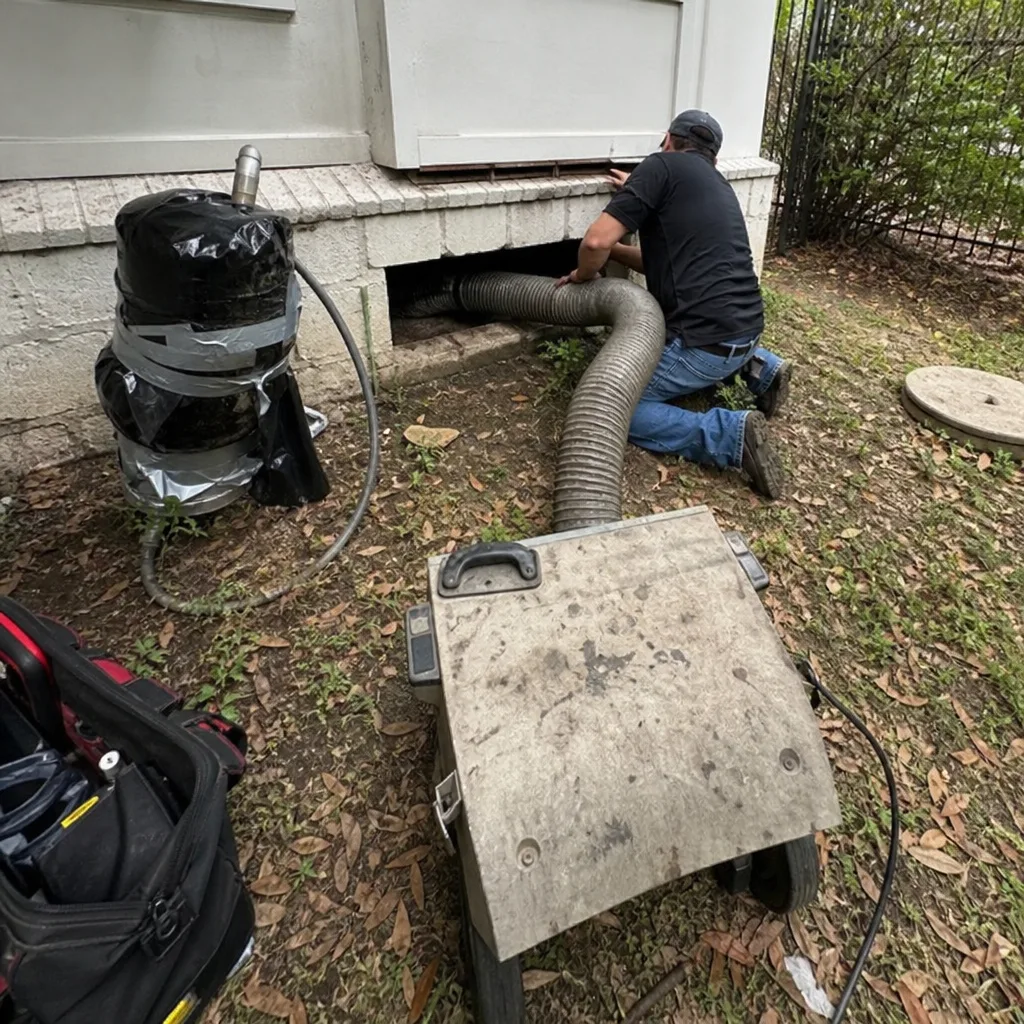 Before
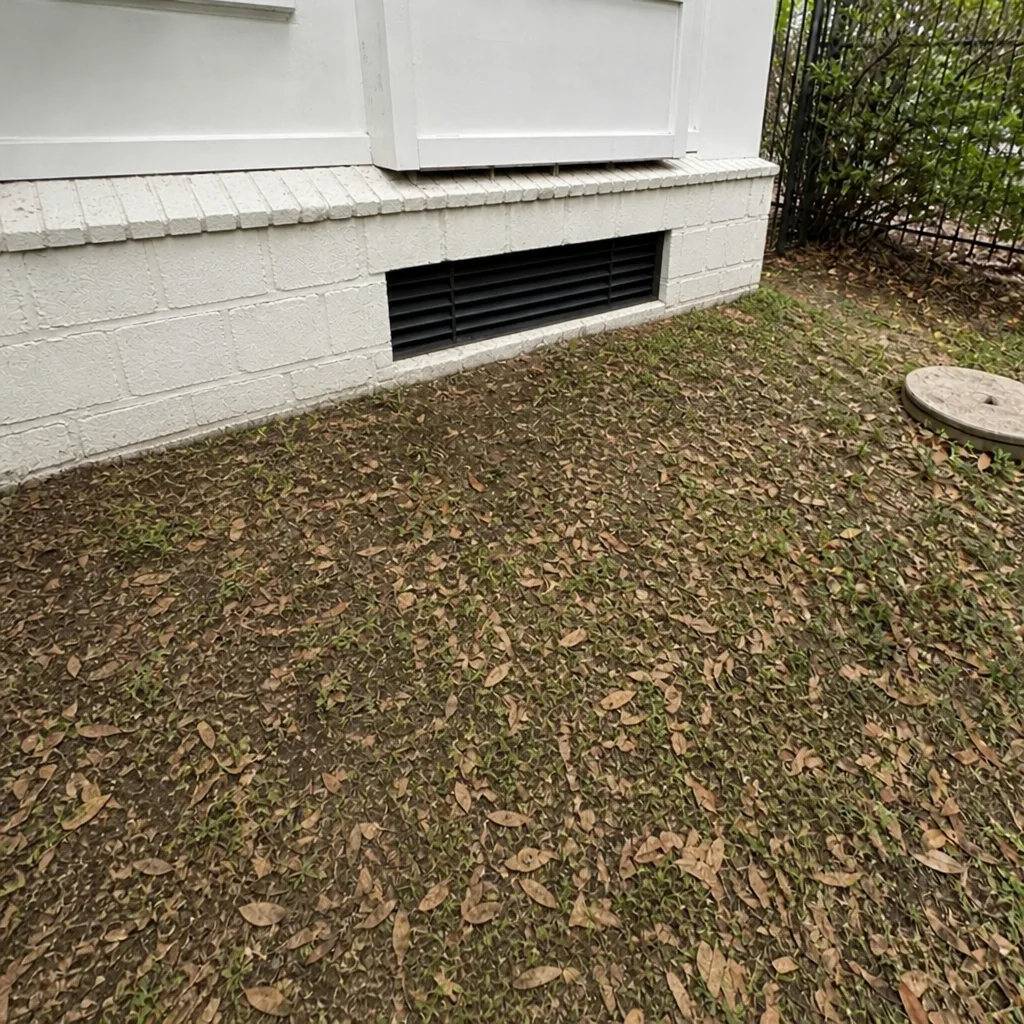 After
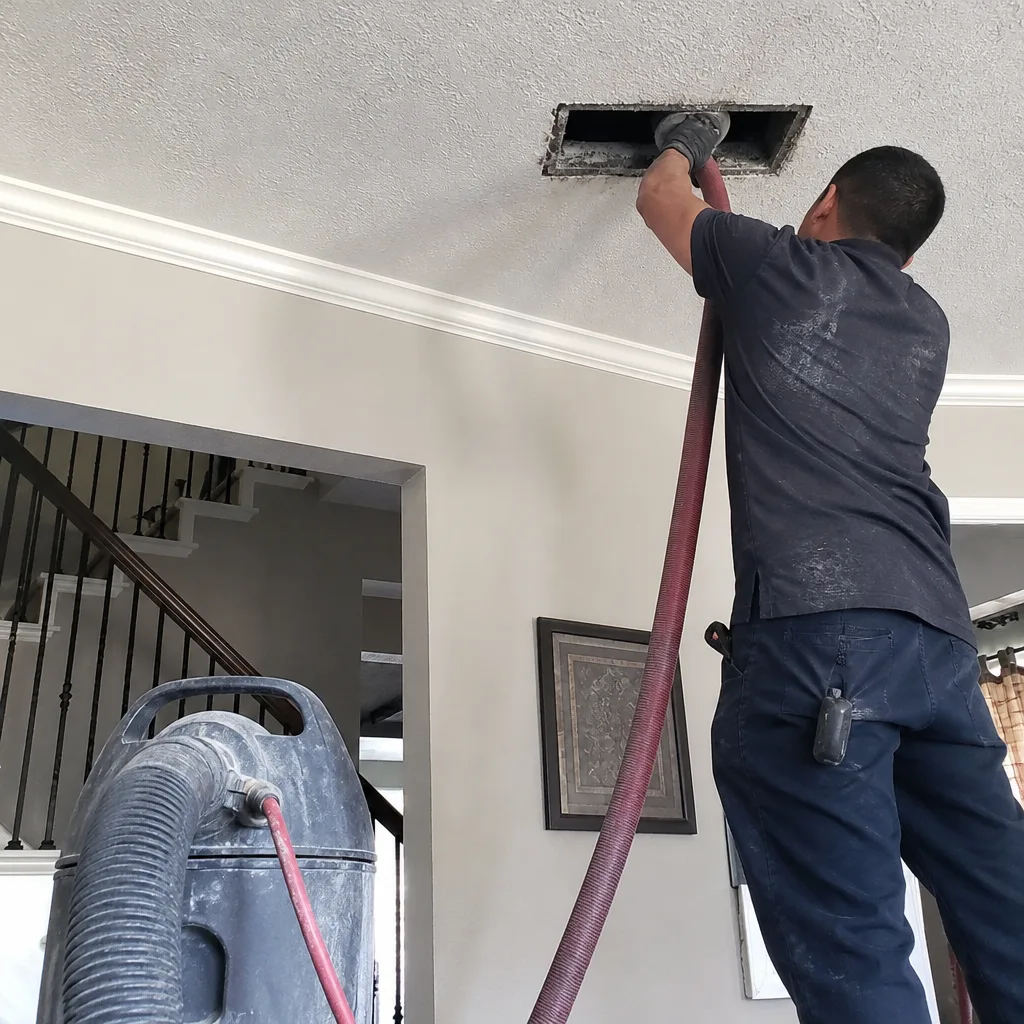 Before
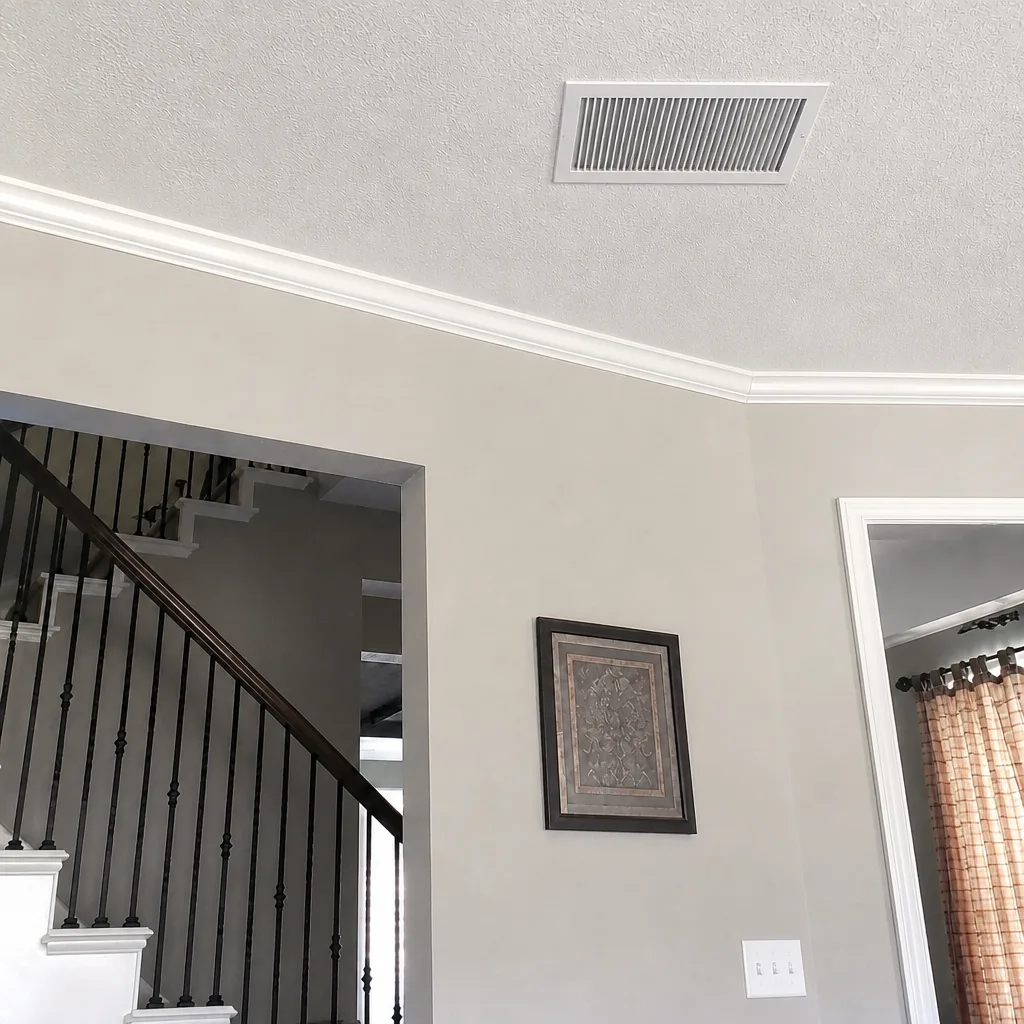 After
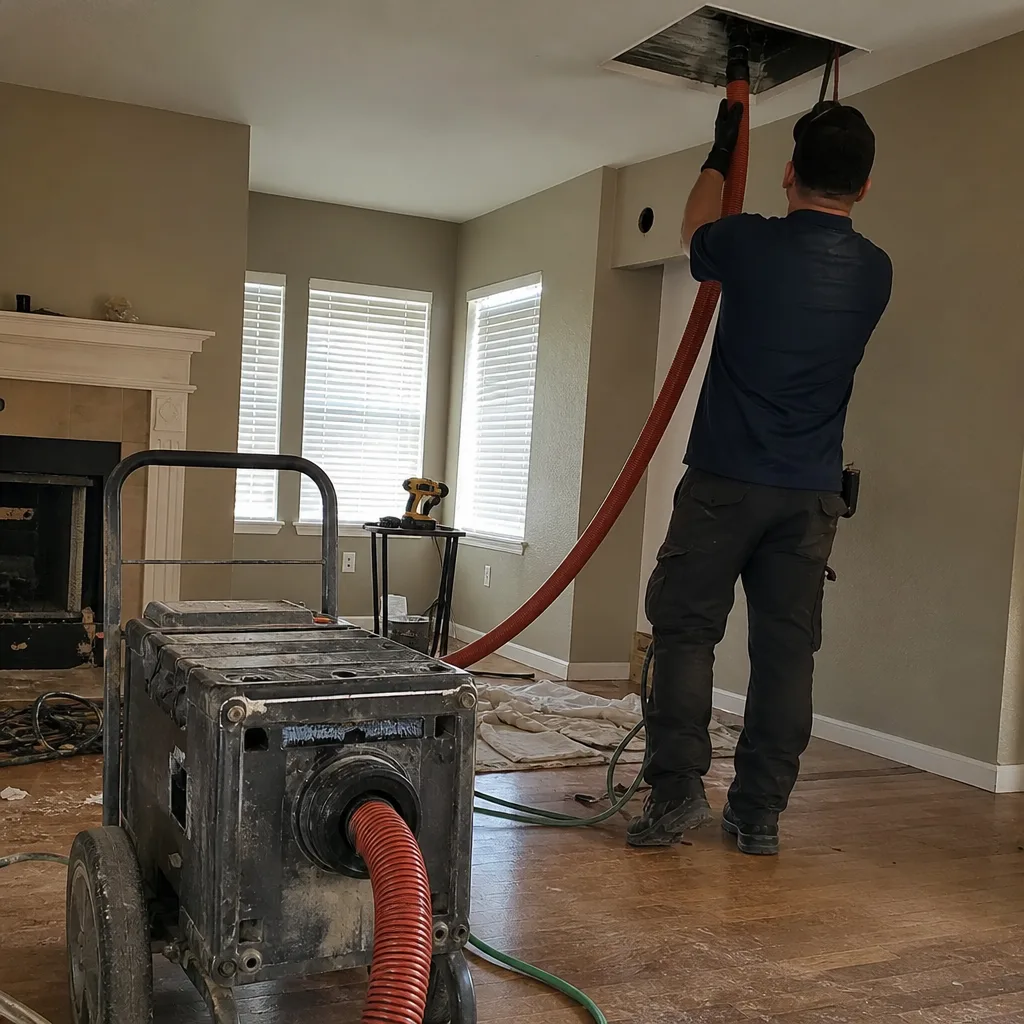 Before
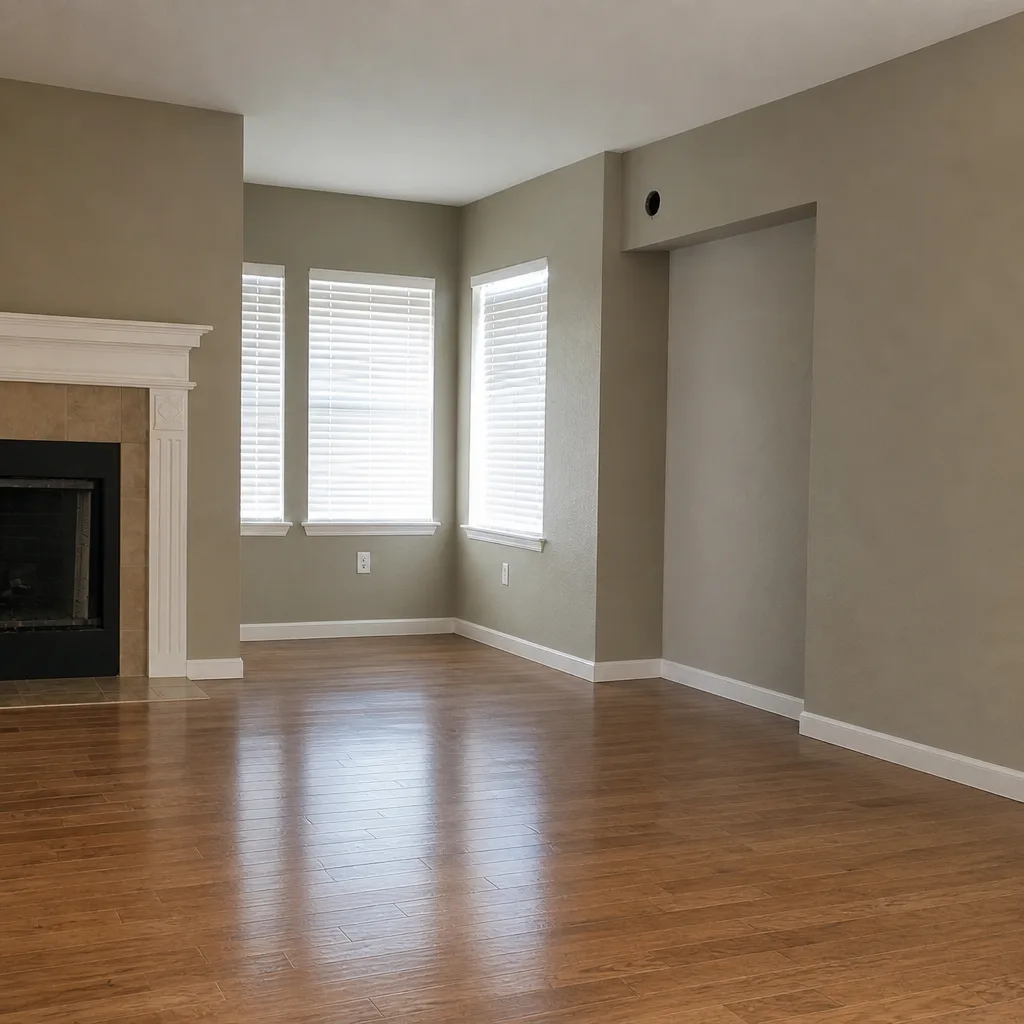 After
Frequently Asked Questions
Yes, for surface dust on registers, grilles, and accessible plenum areas. A shop vac can’t reach past about 18 inches into a duct run and can’t generate the negative pressure needed to pull debris from the main trunk, so anything past the visible opening is out of reach. For full-system cleaning, the equipment matters. Call (833) 508-9172 for a free estimate – estimates are free.
Most homes benefit from a full-system cleaning roughly every three to five years, sooner with pets, recent remodeling, visible contamination, or allergy symptoms. Filter replacement every one to three months, per the manufacturer, is the more frequent task. The right cadence for your Uptown home depends on system age, layout, and how much the system runs.
Air duct cleaning is priced per system, not per vent. We give one flat price per system in a written estimate before any work begins, so the final price is set up front with no per-vent billing. Call (833) 508-9172 and we’ll schedule a free estimate – estimates are free.
Cheap quotes usually price per vent and cover only the visible surface – a quick vacuum at the register opening. The main trunk and branch lines aren’t touched, and the result is the same dust problem a few months later. A whole-system cleaning with Rotobrush or Nikro equipment, containment, and photo documentation is a different scope of work. If a quote is dramatically lower, ask what it actually covers.
Before-and-after photos of your own ducts are the clearest verification. Ask for them. We take them on every job so you can see exactly what came out and what the ducts look like after cleaning. A technician should also be able to walk you through what was cleaned and whether any duct repair or sealing is needed.
No. Disturbing mold with a shop vac without containment sends spores through the system and into living space. Mold inside a duct system is a case for professional remediation with filtration and containment – not a shop vac. If you see visible mold, call us for an assessment first: (833) 508-9172. We answer 24/7.
The Bottom Line
DIY duct cleaning isn’t dangerous and isn’t pointless. It’s just limited – to about 18 inches, to the visible surfaces, to the tasks that don’t require reaching the main trunk. Maintenance tasks like filter changes, register vacuuming, and visual documentation are worth doing yourself. But the full-system cleaning that addresses what’s actually causing the symptoms needs contractor-grade equipment and containment. The four-variable matrix settles the answer for most Uptown homes: age, duct material, contamination, and complexity. Where DIY wins, do it. Where it can’t reach, call a specialist. If you want a straight assessment of your system, Air Duct Cleaning Uptown can help. Call (833) 508-9172 for a free estimate, and we’ll give you a clear read on what your ducts actually need. We answer 24/7. Fast dispatch from 7am to 7pm, Sunday through Friday, closed Saturday.
Written by the team at Air Duct Cleaning Uptown.